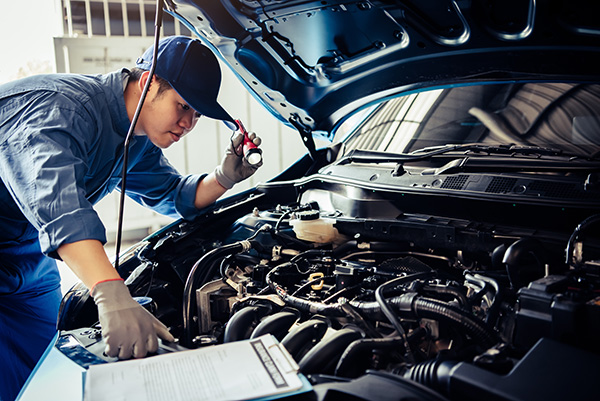
A multi-point car inspection is a broad check of the vehicle’s condition, usually performed during routine service or before a longer trip. It gives technicians a chance to look beyond the immediate reason the car came into the shop and spot wear, leaks, damage, or maintenance needs that may not yet be obvious to the driver.
The exact checklist varies from one shop and vehicle to another. Still, the goal is generally the same: look at the major systems that affect safety, reliability, and day-to-day operation. A good inspection should also help separate problems that need attention now from items that can simply be watched over time.
Tires and Wheels
Tires are one of the first areas worth checking because they affect braking, steering, ride quality, and traction. Technicians may measure tread depth, check air pressure, look for uneven wear, and inspect the sidewalls for cuts, cracking, bulges, or other damage.
Uneven tread can tell a useful story. Wear on one edge may point toward alignment or suspension concerns, while wear across both shoulders can be related to low pressure. The wheels can also be checked for visible bends, damage, or missing hardware, especially if the driver has recently hit a pothole or curb.
Brake System Condition
A multi-point inspection usually includes a visual look at brake pads, rotors, calipers, hoses, and fluid where access allows. Pad thickness gives an idea of remaining life, while rotor condition can reveal scoring, heavy rust, overheating, or uneven wear.
Technicians may also look for:
- Brake fluid leaks around hoses, calipers, or wheel cylinders
- Pads wearing much faster on one side than the other
- Heat damage or unusual discoloration on the rotors
- Cracked hoses or damaged brake hardware
- A parking brake that does not apply or release correctly
A visual inspection cannot measure every part of the hydraulic system, but it can reveal plenty of early warning signs before braking performance changes noticeably.
Steering and Suspension Components
Suspension wear tends to develop gradually, so drivers often get used to changes in ride or steering feel. During an inspection, technicians may check control arms, bushings, ball joints, tie rods, sway bar links, shocks, struts, and wheel bearings.
Loose or worn parts can create clunks, steering wander, uneven tire wear, or changes in alignment. Leaking shocks and struts may also reduce how well the tires stay controlled over bumps. If movement or damage is found, the next step is usually a more focused inspection rather than automatically replacing every worn-looking component.
Fluid Levels and Visible Leaks
Most vehicles depend on several different fluids, and a multi-point check usually includes checking the levels and visible condition of fluids that can be accessed safely. That may include engine oil, coolant, brake fluid, transmission fluid, power steering fluid on hydraulic systems, and windshield washer fluid.
Technicians also look underneath and around the engine for signs of leakage. A damp gasket is different from an active drip, so the location and severity are important. Oil, coolant, transmission fluid, and other leaks should be traced to their actual source before repairs are recommended.
Battery, Belts, and Hoses
The battery may be checked for corrosion, loose connections, physical damage, and overall condition. Some inspections also include a battery test that measures available starting capacity rather than relying only on voltage.
Belts and hoses are checked for deterioration that can lead to trouble later. Technicians may look for:
- Cracks, frayed edges, or contamination on drive belts
- Hoses that are swollen, leaking, or unusually hard
- Loose battery terminals or corrosion around the posts
- Damaged belt tensioners or pulleys
- Coolant residue around hose connections
These are relatively simple checks, but they can prevent a breakdown caused by a failed belt, weak battery, or leaking cooling hose.
Lights, Wipers, and Visibility
Exterior lighting is easy to overlook when you are always sitting inside the vehicle. Brake lights, turn signals, headlights, marker lights, and license plate lights can all fail without creating an obvious warning for the driver.
Wiper blades and windshield condition also deserve attention. A blade that streaks badly may be little more than an annoyance on a dry day, but it becomes a safety concern during heavy rain. Cracks, chips, and washer operation may also be noted during the inspection.
Filters and Routine Maintenance Items
Depending on the service and vehicle, technicians may check the engine air filter and cabin air filter. A heavily restricted engine filter can affect airflow, while a dirty cabin filter can reduce ventilation and collect dust, leaves, and other debris.
The shop may also compare the current mileage with the maintenance schedule. Spark plugs, coolant, transmission service, brake fluid, differential fluid, and other items are not automatically due just because an inspection is being performed. Service history and manufacturer recommendations should guide those decisions.
What a Multi-Point Inspection Does Not Mean
An inspection is not the same as detailed diagnostic testing. If a technician notices an oil leak, for example, the inspection may identify the general area, but cleaning, pressure testing, dye, or further disassembly may be needed to find the exact source.
The same applies to warning lights, noises, electrical concerns, and drivability problems. A multi-point inspection helps identify areas that deserve attention, while diagnostic testing is used to determine why a specific problem is happening.
A Useful Inspection Should Prioritize the Findings
The final report should make it clear which concerns are urgent and which are simply worth monitoring. A worn tire close to its limit should not be presented the same way as a minor seep that has not changed in months.
Measurements, photographs, and clear explanations make the report much more useful. Regular maintenance visits also give technicians something to compare against, so they can see whether a condition is stable or getting worse.
Get a Multi-Point Car Inspection in Martinez, CA, With Hagin's Automotive
Hagin's Automotive in Martinez, CA, can inspect tires, brakes, steering, suspension, fluids, belts, hoses, battery condition, lighting, and other important vehicle systems.
Contact us to schedule a multi-point inspection if you want a clearer picture of your vehicle’s current condition and upcoming service needs.